Home » Emerging Contaminants Outreach » Neonicotinoids » Wisconsin Neonicotinoid Workgroup
Wisconsin Neonicotinoid Workgroup
Wisconsin Neonicotinoid Workgroup
About Us
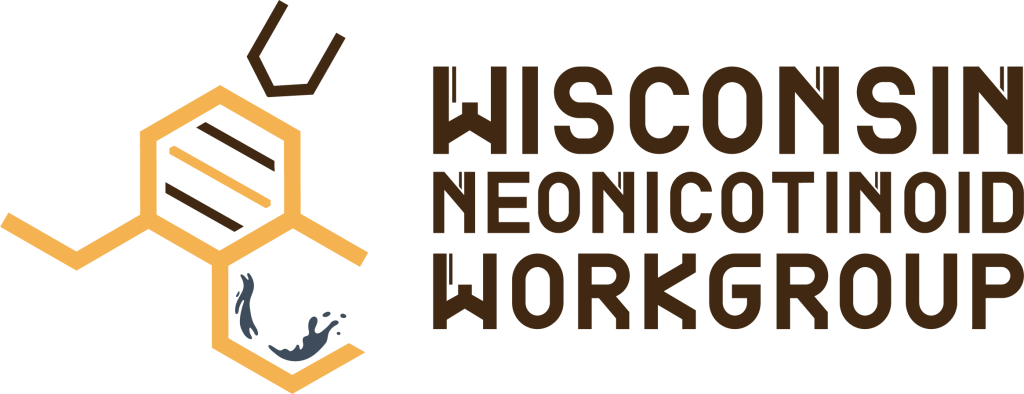
Neonicotinoids, or neonics, are commonly used pesticides in agricultural and urban environments. They can be used in a variety of ways, such as seed treatments, soil treatments, foliar sprays, and topical applications. They impact a wide range of insects and other invertebrates, while being comparatively non-toxic to humans and other mammals. Recent research has shown that neonics have spread throughout our environment beyond their area of application, impacting our ecosystems and raising concerns about possible health impacts.The goal of this group is to support effective decision-making by fostering collaboration among researchers, conservation groups, agricultural operators and professionals, and the general public.
Educational Resources
If you want to learn more about neonicotinoids, looking for presentations or fact sheets to share with your community, or you want to inform your own presentations check out the resources below.
Fact Sheets
Educational quick fact sheets for downloading and printing.
Public Presentations
Access presentation slides and recordings created by members of the group.
Meeting Recordings
This text is a description of this item. A key feature of this pattern is the icon at the top. Click on the icon to replace it with any icon in our icon library.
Whitepapers and Publications
Find neonicotinoid whitepapers and publications created or recommended by workgroup members.
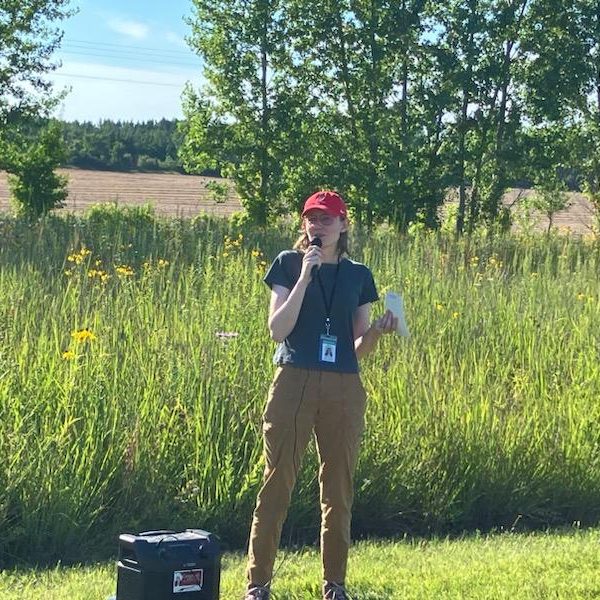
Request a speaker
Want one of our experts to present about neonicotinoids at your event?
Fill out the survey below, making sure to leave your contact information and one of our coordinators will connect with you.
Join our group
If you would like to attend webinars, join the listserv, or contribute to education materials, join our workgroup email and listserv.
Upcoming Events
- To Be Updated
Acknowledgments
This workgroup is co-coordinated by the University of Wisconsin Natural Resources Institute, the Wisconsin River Alliance, and Clean Wisconsin.