

Home » Conservation Professional Training Program – Homepage » Conservation Professional Training Program – Trainings
Conservation Professional Training Program – Trainings
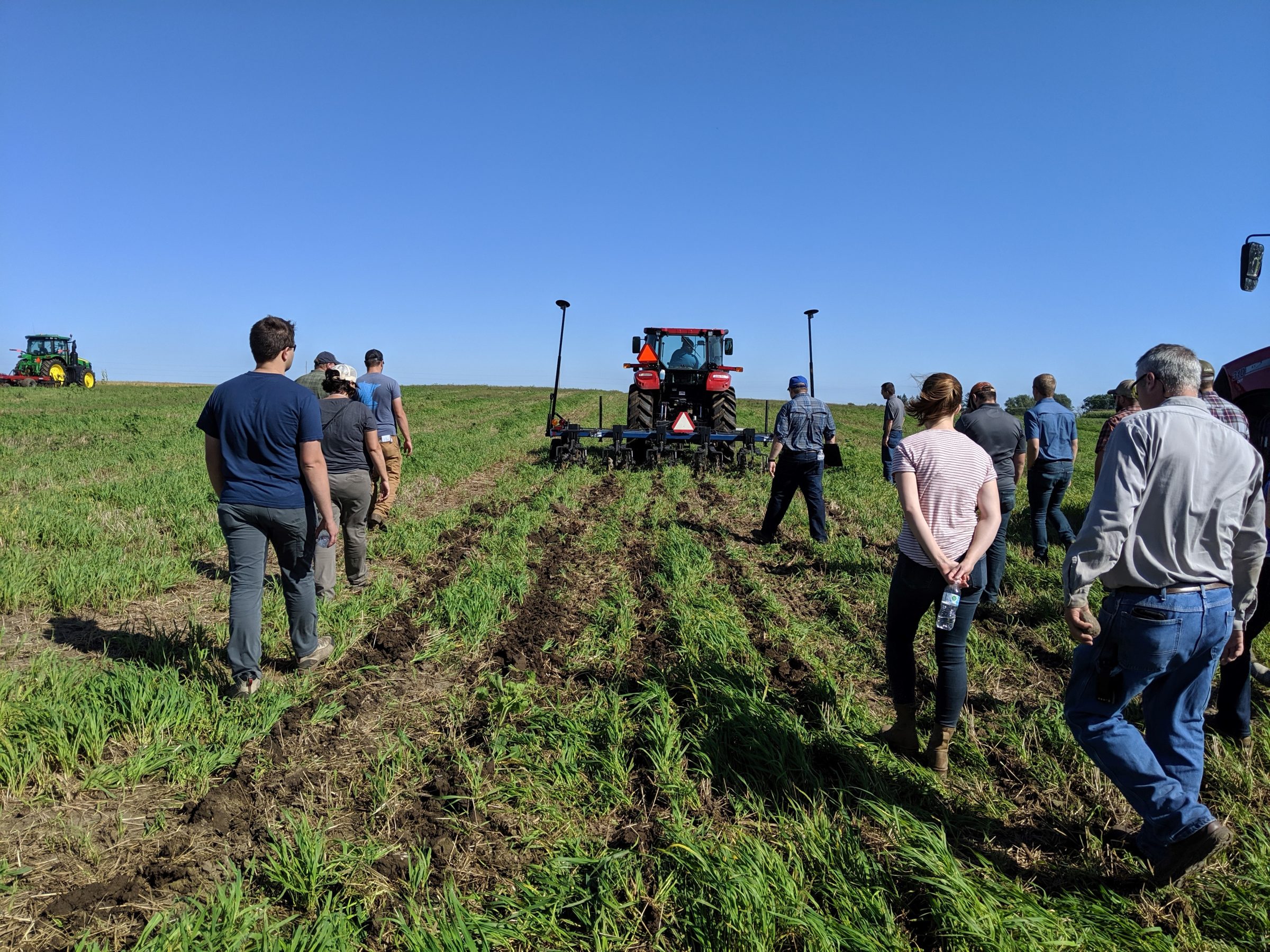
Conservation Professional Training Program
Our Trainings
From introductory courses for new employees to advanced training for conservation advisors, the Conservation Professional Training Program, or CPTP, provides the training you need at every level.
Most Recent In-Person Trainings
Please reach out to Kevin Erb with questions – kevin.erb@wisc.edu, 920-391-4652 (landline).
Karst Geology in Northeast Wisconsin
Date
Monday, July 20, 2026, 9 am -3:15 pm
Location
Brown County STEM Innovation Center, 2019 Technology Way, Green Bay
Description
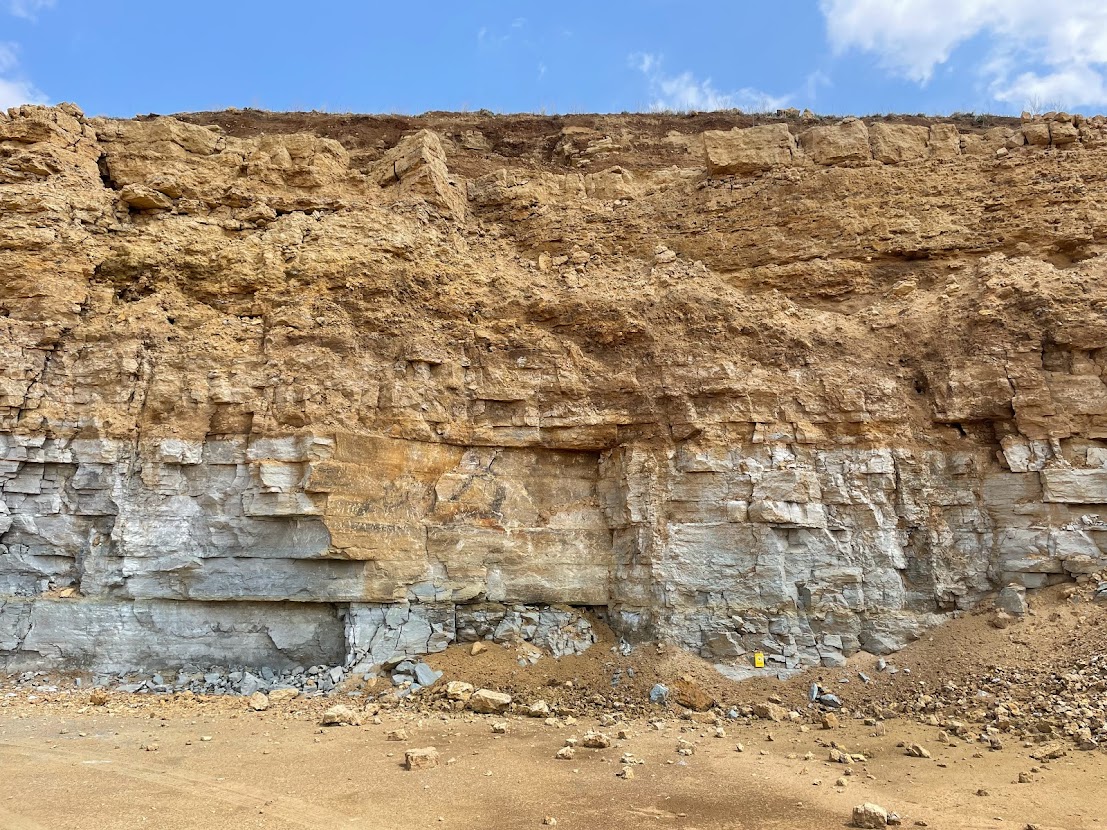
This one-day training was designed to dig deeper into the geology and groundwater flow in Northeast Wisconsin, discuss the basics and limitations of depth to bedrock and karst mapping, and provide real case studies of groundwater concerns and examples of local approaches to concerns. The afternoon field session included a quarry visit and/or site visits to discuss methods of sinkhole and karst feature identification.
The audience for this agency training was DNR drinking water staff, DNR CAFO, runoff, nonpoint, spills R&R staff, LWCD/NRCS staff and consultants in Karst areas.
Additional trainings will be hosted in the future – stay tuned for more information!
Available Online Trainings
Fundamentals of Soil Health
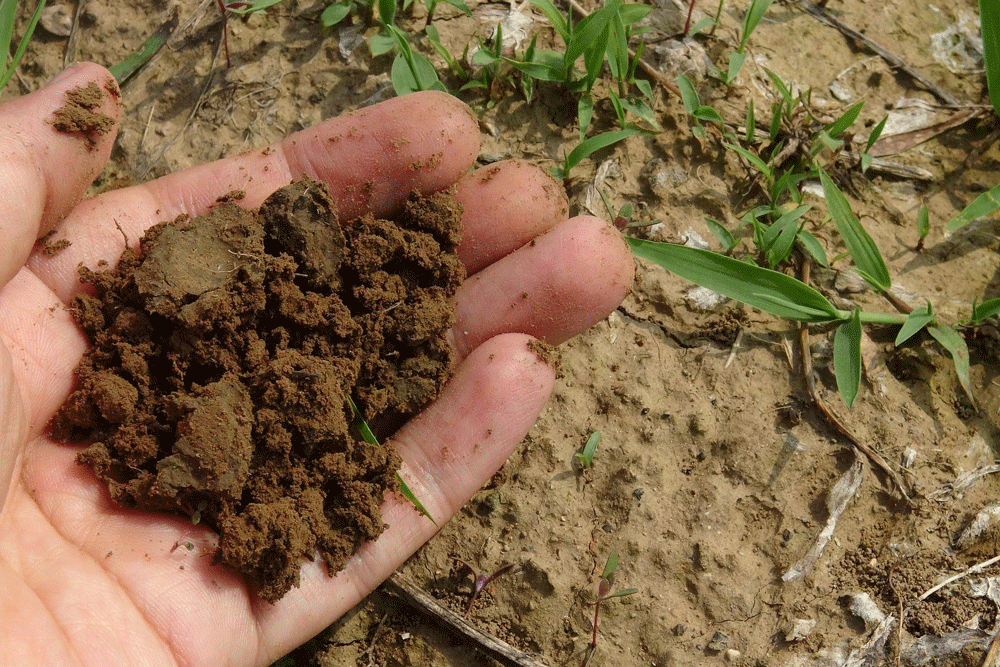
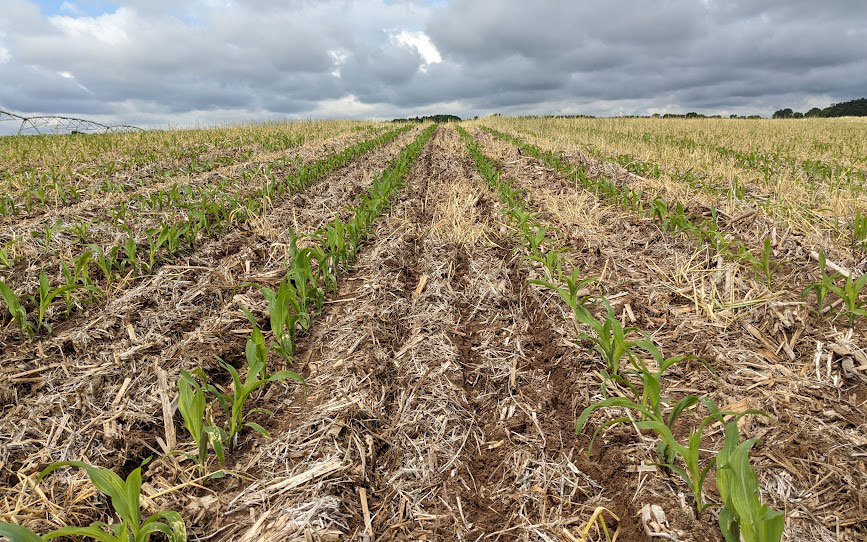
Learn to improve your soil and water management, implement cover crops, and build soil health through four self-paced online soil health courses for farmers and agricultural professionals. These self-paced, online courses are available at no charge, and can be taken stand-alone or in conjunction with the in-field soil health training.
To register or for more information, contact Kevin Erb at kevin.erb@wisc.edu or 920-391-4652.
AgLearn Courses
The Conservation Professional Training Program has worked with the USDA’s Natural Resource Conservation Service to create a series of online courses hosted through AgLearn.
Federal employees should automatically have an AgLearn account. Non-federal employees will need additional assistance to access AgLearn courses.
For assistance, please contact your state’s NRCS agronomist.
The courses our team has developed are listed below:
Basics of Plant Identification for Conservation Planners
This course introduces plant identification and its role in the conservation planning process.
AgLearn Catalog Number
NRCS-NEDC-000450
Communication Skills for Conservation Professionals: The Art of Helping People Help the Land
This course gives you a foundation in the methods and tools that will help you grow your communication skills and develop productive working relationships with your customers. You will learn effective communication practices, barriers to communication, and strategies to adapt your communication approach to help people help the land.
AgLearn Catalog Number
NRCS-NEDC-000501
Conservation Planning Part 1
This course provides an introduction to the Nine Steps of Conservation Planning. Areas of focus include how we approach conservation of natural resources, how we approach and serve our clients, and how the work we do is designed to balance the client’s economic, cultural, and environmental concerns.
AgLearn Catalog Number
NRCS-NEDC-000019
Conservation Reserve Program Training for Technical Service Providers
Designed for TSPs and partners working with the Conservation Reserve Program (CRP), the focus is on the responsibilities of NRCS, the TSP, and the program participant, conservation plan development, and working with the client to complete contract documentation
AgLearn Catalog Number
NRCS-NEDC-000504
Delivering Effective Blended Training to Conservationists
The course provides succinct, practical information to help you create effective blended trainings.
AgLearn Catalog Number
NCRS-NHQ-000055
Ecological Site
Descriptions
This course informs conservation professionals about ecological site descriptions and the value of referencing them throughout the NRCS conservation planning process.
AgLearn Catalog Number
NRCS-NEDC-000428
Emergency Watershed Protection Program Readiness
This course will refresh your knowledge of the Emergency Watershed Protection (EWP) Program and help you get ready to support program efforts in your area. The course takes approximately 20 minutes to complete.
AgLearn Catalog Number
NRCS-NEDC-000490
Forage Suitability Group (Pasture States)
This course introduces forage suitability groups (pasture states) and their reports.
AgLearn Catalog Number
NRCS-NEDC-000427
FSA 858 Wetland Screening Tool
This course provides a step-by- step method to understand and complete the FSA-858 form, along with background and practice in identifying potential wetlands on an applicant’s property that may impact his/her loan application.
AgLearn Catalog Number
FSA-HQ-DAFP-858
Fundamentals of Highly Erodible Land Conservation (HELC) and Wetland Conservation (WC) Provisions
This course will give an overview of the basics of the Highly Erodible Land Conservation (HELC) and Wetland Conservation (WC) provisions of the Food Security Act of 1985, as amended.
AgLearn Catalog Number
NRCS-NEDC-000409
Introduction and Orientation to the Conservation Reserve Program (CRP)
Designed for both NRCS and FSA staff, this course focuses on agency roles in the CRP process and using CRP to implement conservation on the ground to preserve and improve our nation’s soil, water, and wildlife resources.
AgLearn Catalog Number
NRCS-NEDC-000509
Introduction to Conservation Forestry
This course informs conservation planners about basic forest ecology and forest management practices to establish a foundation for implementing forestry and agroforestry conservation practices.
AgLearn Catalog Number
NRCS-NEDC-000482
Introduction to Pasture Condition Scoring
This course introduces the pasture evaluation approach known as Pasture Condition Scoring (PCS), including the 10 indicators of pasture health most commonly used in PCS and some tools for evaluating the indicators.
AgLearn Catalog Number
NRCS-NEDC-000414
Introduction to the Emergency Watershed Protection Program
This course provides participants with fundamental knowledge about the Emergency Watershed Protection (EWP) Program, including the types and levels of assistance available, program timelines, the recovery process that NRCS follows, key documentation required, and program eligibility criteria. Participants also take away information about where to locate EWP Program information and common roles that NRCS staff fulfill.
AgLearn Catalog Number
NRCS-NEDC-000491
NEPA, the NRCS-CPA-52 Environmental Evaluation and Conservation Planning
The course explores NEPA, the NRCS 9 Step Planning Process, and the NRCS-CPA-52 Environmental Evaluation Worksheet.
AgLearn Catalog Number
NRCS-NEDC-000048
Rangeland Health Assessment
This course is designed to raise awareness of when, why, and how to use the rangeland health assessment procedure as detailed in Interpreting Indicators of Rangeland Health.
AgLearn Catalog Number
NRCS-NEDC-000410
Stream Visual Assessment Protocol 2 (SVAP2)
Stream Visual Assessment Protocol 2 (SVAP2) introduces the process of visually assessing streams on working land.
AgLearn Catalog Number
NRCS-NEDC-000423
Technical Service Providers Orientation and Conservation Planning Part 1
Designed to help applicants seeking certification to become technical service providers (TSPs), this course outlines the steps for certification, provides a basic awareness of NRCS expectations, and introduces how to effectively partner with NRCS and eligible participants to implement conservation.
AgLearn Catalog Number
NRCS-NEDC-000191
Using Basic Soil Survey Information in Conservation Planning
The goal of this course is to introduce several common soil properties and interpretations, the basics of map unit composition, and Web Soil Survey, the official source of soils data.
AgLearn Catalog Number
NRCS-NEDC-000416
Using Planning Criteria in Conservation Planning
This course introduces the NRCS planning criteria and their role in each phase of the Nine Steps of Conservation Planning.
AgLearn Catalog Number
NRCS-NEDC-000486
Using WIN-PST for Conservation Planning
This course introduces the Windows Pesticide Screening Tool (WIN-PST), how to run it, and how to interpret and use its reports.
AgLearn Catalog Number
NRCS-NEDC-000429
Water Quality Series for Conservation Planners: Nitrogen Management and Concerns – No 2
This course provides the basic knowledge conservation planners need to reduce nitrogen losses from the landscape. The course covers the effects of nitrogen on water quality, nitrogen forms and transformation, loss pathways to groundwater and surface water, and management of nitrogen for water quality. Planners will learn key risk factors to evaluate during inventory and analysis for nitrogen loss, and the basic framework of a conservation systems approach for reducing nitrogen loss from nonpoint and concentrated sources.
AgLearn Catalog Number
NRCS-NHQ-000039
Water Quality Series for Conservation Planners:
Pest Management and Water Quality Implications – No. 6
This course discusses pest management and the impacts that it has on water quality.
AgLearn Catalog Number
NRCS-NEDC-000043
Water Quality Series for Conservation Planners: Phosphorus Management and Concerns – No. 3
This course provides a foundation in the effects of excessive phosphorus in the environment, phosphorus cycling and transformation in soil, water loss pathways, and management of phosphorus for water quality. The course covers the inventory and analysis process for evaluating phosphorus risk to surface and ground water, and conservation approaches, practices, and techniques for reducing phosphorus loss to water bodies.
AgLearn Catalog Number
NRCS-NHQ-000040
Water Quality Series for Conservation Planners: Sediment Management for Water Quality – No. 4
This course introduces you to sediment management for water quality. You will learn the impacts of sediment on water quality, conditions that help you observe sediment movement, factors that influence sediment movement, and strategies for sediment management. You will be introduced to the inventory process for evaluating sediment transport, including key tools. You will learn how conservation practices and techniques can be used in a conservation systems approach to managing offsite losses of sediment and transport to surface water.
AgLearn Catalog Number
NRCS-NHQ-000041
Watershed-Scale Water Quality Assessment and Planning
This course will help Level 3 and 4 conservation planners and technical specialists extend their knowledge, skills, and abilities related to water quality assessment and apply them to the watershed scale. It is also appropriate for anyone wanting to expand their technical expertise in order to support watershed-level planning.
AgLearn Catalog Number
NRCS-NHQ-000190
Wildlife Habitat Evaluation for Conservation Planning
The course introduces the concept of wildlife habitat and how to apply science-based means of evaluation to aid the conservation planning process.
AgLearn Catalog Number
NRCS-NEDC-000426