

Written by Mandy Choy, Natural Resources Institute Communications Assistant
Since mid-August, nearly half of Wisconsin has experienced drought conditions, with severe to exceptional drought affecting parts of northern Wisconsin, including Ashland, Bayfield, and Iron counties. While drought can impact agriculture, lakes, rivers, and forests, it can also create concerns for the nearly 900,000 Wisconsin residents who rely on private wells for their drinking water.
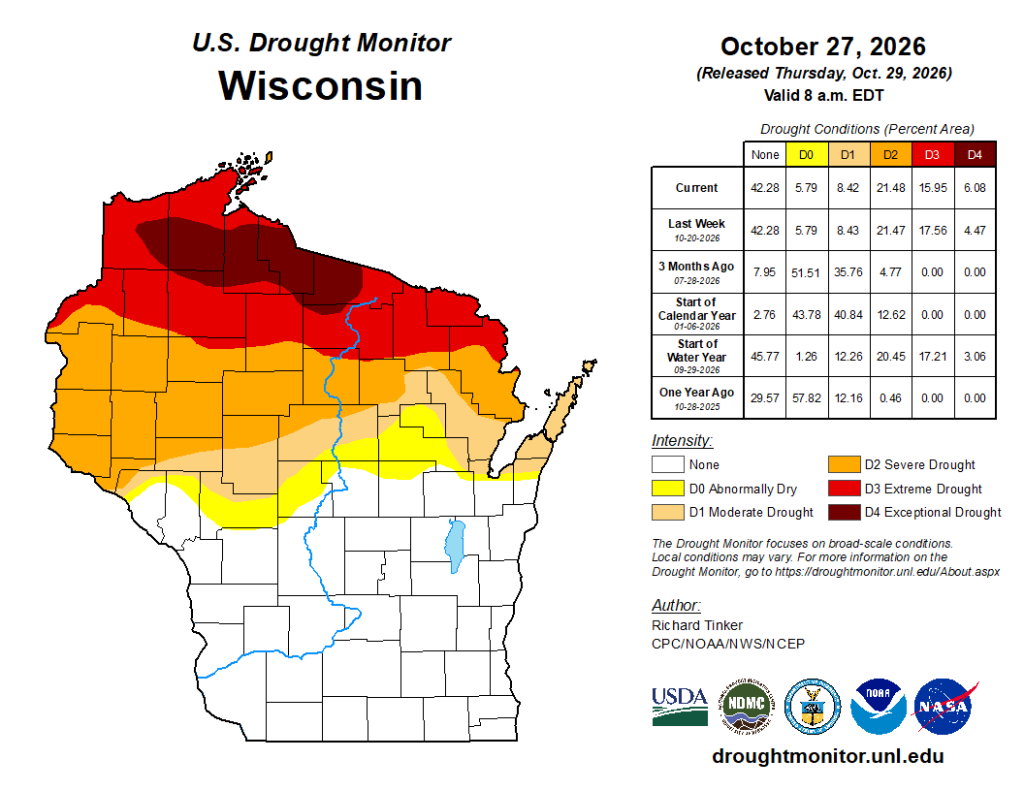
Private wells depend on groundwater stored beneath the earth’s surface. Because groundwater is out of sight, many well owners wonder: What happens to my well during a drought? Can drought affect water quality? And what should I do if my well starts showing signs of trouble?
To answer these questions, we spoke with Kevin Masarik, Director of the Center for Watershed Science and Education and Extension Groundwater Education Specialist, and Bridgette Mason, Wisconsin Assistant State Climatologist.
How Does Drought Affect Groundwater and Private Wells?
To understand how drought affects private wells, it helps to understand how groundwater works.
Groundwater begins as rain or snowmelt that infiltrates the soil and slowly moves downward through layers of sand, gravel, and rock. This water fills underground aquifers, which are the primary source of drinking water for private wells.
During periods of normal precipitation, groundwater is continually replenished through a process called recharge. During drought, however, recharge slows or stops altogether.
“A couple weeks or even a month of dry weather may not result in noticeable changes,” says Masarik. “But when we have months or years of below-average precipitation, people may begin to notice impacts to both water levels and water quality.”
As groundwater levels decline, the water table can drop below portions of a well that normally supply water, reducing well yield or, in severe cases, causing wells to go dry.
Why Are Some Wells More Vulnerable Than Others?
Not every private well responds to drought the same way.
A well’s susceptibility depends on several factors, including its location, depth, and construction.
Wells located on hilltops often have a greater distance between the land surface and groundwater than wells located in low-lying areas near lakes, streams, or wetlands. As groundwater levels decline, wells in elevated locations may experience impacts sooner.
Well design is also important. Shallow wells typically extend only a short distance into an aquifer and are more vulnerable to fluctuations in groundwater levels. Deeper wells often have access to larger volumes of groundwater and may be more resilient during extended dry periods.
Can Drought Affect Well Water Quality?
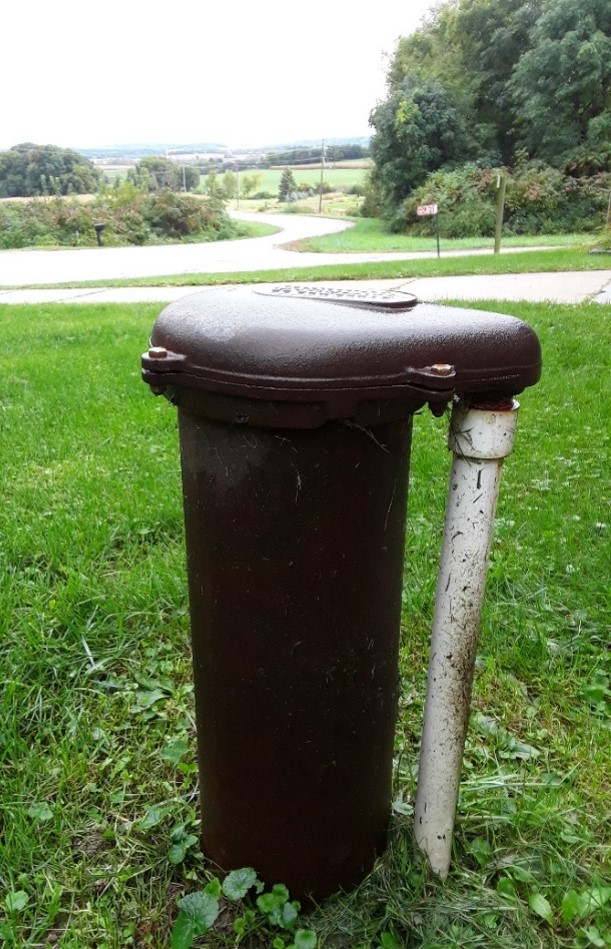
Yes. While many well owners focus primarily on water quantity during drought, changes in groundwater levels can also influence water quality.
Masarik notes that some private well owners report changes in taste, color, odor, or clarity during prolonged dry periods or conversely following large recharge events or prolonged wet periods as the water table rises again.
In some areas, declining groundwater levels can increase concentrations of naturally occurring minerals such as iron and manganese, resulting in discolored water or metallic tastes. These changes are often reported in shallow wells and in areas near lakes, wetlands, or other groundwater-dependent ecosystems.
However, because most private well owners do not regularly test their water, it can be difficult to determine whether water quality has changed over time.
“Private well owners are essentially their own water utility managers,” says Masarik. “It’s up to them to determine what to test for, how often to test, and where to send samples.”
Routine testing provides valuable baseline information that allows homeowners to identify changes before they become larger concerns.
How Is Drought Affecting Wisconsin This Year?
Northern Wisconsin has experienced significantly below-average precipitation since late spring.
According to Mason, some areas of Bayfield, Ashland, and Iron counties received less than 50 percent of their normal precipitation between May and late October. The prolonged lack of rainfall has reduced soil moisture, lowered streamflows, and limited groundwater recharge across the region.
Because groundwater systems respond more slowly than rivers or lakes, impacts to private wells may continue even after rainfall returns.
A single storm is rarely enough to fully recharge groundwater aquifers after an extended drought. Meaningful recovery often requires months of consistent precipitation and seasonal recharge.
How Can I Monitor My Well During a Drought?
Groundwater is difficult to observe directly, but there are several ways homeowners can monitor conditions.
Visible indicators may include declining water levels in nearby lakes, ponds, or wetlands, particularly those that have little inflow or outflow.
Homeowners can also follow groundwater monitoring information collected by the Wisconsin Geological and Natural History Survey. These monitoring networks track groundwater levels in wells across Wisconsin and can help identify regional trends.
Masarik cautions against opening a well to measure water levels unless you are trained to do so.
“Once a well is operating efficiently … there is usually little reason to open it,” he says. Opening a well improperly can introduce bacteria and create additional water quality concerns.
For homeowners interested in monitoring water levels, specialized equipment can measure groundwater without compromising the integrity of the well system. A licensed well professional can also assist with evaluating well performance.
What Can I Do to Reduce Stress on My Well?
During drought, managing water demand can be just as important as conserving water.
Rather than using large amounts of water over a short period of time, Masarik recommends spreading water use throughout the day whenever possible.
Activities that place high demand on a well include:
- Showering
- Running washing machines
- Using dishwashers
- Lawn and garden irrigation
Spacing these activities apart allows the well additional time to recover between pumping cycles.
Homeowners can also reduce unnecessary outdoor water use and promptly repair leaky faucets, plumbing fixtures, or toilets.
What Should I Do If My Well Runs Low or Goes Dry?
One of the most serious risks during drought is a declining water level that drops below the pump intake.
When this occurs, a pump may begin drawing air instead of water. Continued operation can overheat and permanently damage the pump. The appropriate solution depends on the type of well and pumping system.
For wells with submersible pumps, it may be possible to lower the pump farther into the well if additional depth is available, but the downside here is that it’s likely to stir up stuff on the bottom of the well which may also impact water quality.
Shallow sand-point wells and jet pump systems are often more vulnerable because they rely on suction and can only lift water a limited distance. If groundwater levels fall below that threshold, the system may lose its ability to draw water altogether.
Unfortunately, there is not always a quick fix.
“Wells going dry or burning out pumps is probably the biggest concern during drought,” says Masarik. “In some situations, the solution is simply waiting for enough precipitation to recharge the aquifer. In others, drilling a deeper well may be necessary.”
If you experience sudden loss of water, contact a licensed Wisconsin well driller or pump installer before assuming the well has run dry. Mechanical failures often cause similar symptoms.
Resources for Wisconsin Private Well Owners
Private well owners looking for additional information can explore several Wisconsin-based resources:
- Well Water Testing Resources from the Center for Watershed Science and Education provide guidance on well water quality and water levels, and testing services.
- Water WELLness Guide: Managing Your Private Well Water System provides educational materials on well maintenance and groundwater basics.
- Wisconsin Well Water Quality Viewer allows homeowners to explore well water data from across the state.
- Wisconsin Hydrogeology 101 offers an introduction to groundwater systems and aquifers in Wisconsin.
- US Drought Monitor of Wisconsin shows weekly updates of drought conditions in the state. At the bottom of the site, make a Report of your well if any changes occur to help create an accurate representation of the drought conditions.