
Ask a high school student what they want to be when they grow up, and you’ll likely hear doctor, teacher, or scientist. Rarely do you hear geotechnical engineer, conservation specialist, or watershed planner. That isn’t because students lack interest. More often, it’s because they have never had a chance to see these careers up close.
The UW–Madison Division of Extension Natural Resources Institute (NRI) works to change that. Across Wisconsin, Extension programs provide hands‑on learning, mentorship, and direct exposure to natural resource work. These experiences help young people understand not only what these careers look like, but how they might fit into them.
During Day of the Badger on April 14 and 15, we take time to recognize the students whose paths have been shaped by these opportunities and the supporters who make them possible. From high school through early career, NRI programs help students build practical skills in water resource management, forestry, geology, conservation, and environmental education. These are the skills Wisconsin communities depend on today and will need even more in the future.
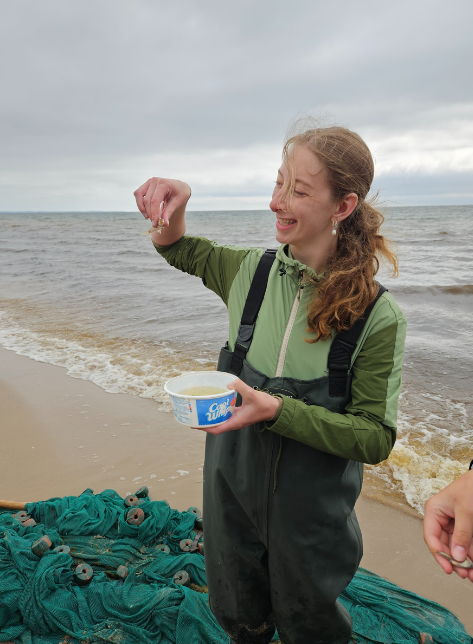
For many students, imagining a career in natural resources starts with doing the work themselves. Programs like Extension’s partnership with UW–Green Bay’s Lower Fox River Watershed Monitoring Program and the Freshwater Scholars Program introduce environmental science to students while they are still in high school. Students monitor impaired streams throughout the Fox River watershed and collect water quality data that support long‑term restoration efforts. The Freshwater Scholars Program builds on that experience by pairing students with mentors for paid, summer‑long opportunities that help them develop professional skills before college.
Ziah Mangin participated in Fox River monitoring throughout all four years of high school and went on to become a 2025 Freshwater Scholar. “Fox River Monitoring inspired me to pursue science in my post–high school path,” Ziah says. “The field work and lab work helped me build a strong understanding of our local waterways.” Ziah now works in a water chemistry lab at UW-Madison while getting her undergraduate degree, and she credits the Freshwater Scholar Program for helping her gain the experience needed for the role.
At Upham Woods in Wisconsin Dells, Reedsburg High School junior Cara Schoenhard is also gaining early exposure to environmental work. Through an apprenticeship supported by the Wisconsin Department of Workforce Development, Cara facilitates youth programs, learns graphic design skills, and earns school credit while completing more than 400 hours of professional experience. Experiences like Cara’s and Ziah’s help students explore their interests and begin to see where they might belong in the natural resources field.
As students move into college, that exploration continues. With many undergraduates changing majors at least once, real-world experience becomes especially important for discovering what truly fits.
Undergraduate intern Hope Dzik spent her summer at Upham Woods developing protocols for youth to investigate whether invasive carp are present in local water bodies using environmental DNA, or eDNA. The experience helped clarify her next steps. “Grad school does not seem as intimidating anymore,” she says. “I arrived at Madison questioning my post‑undergraduate plans, and now I have started to plan my future in biological research.” This year, another student will step into that role and build on the foundation Hope helped create.
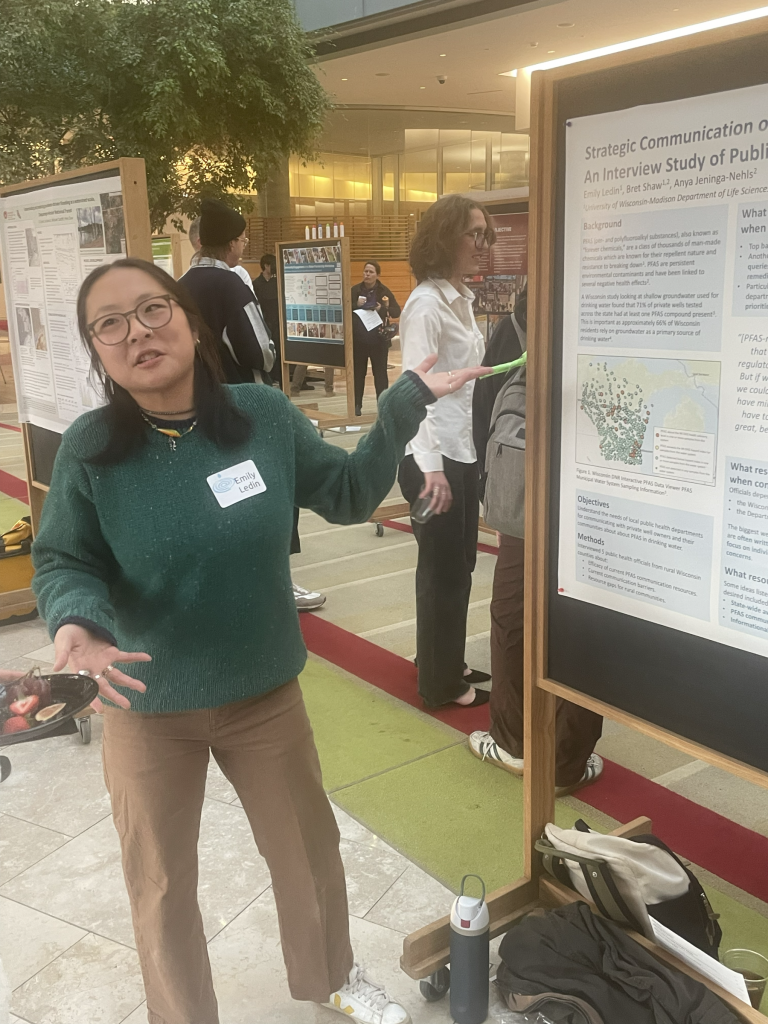
Undergraduates also gain experience through research partnerships across NRI. Emily Ledin, a UW–Madison life sciences communication student, worked with Extension faculty and staff on her senior honors thesis. Her research focused on a statewide needs assessment to understand how county and state health and conservation staff communicate about PFAS in drinking water, and the challenges they face in doing so.
“Getting to work directly with Extension has been rewarding because I know this work will actually help people,” Emily explains. “I’m excited that this study will continue beyond my time at UW–Madison and support Extension’s work across Wisconsin.”
For students who continue on to graduate school, these early experiences often lay the groundwork for deeper specialization, mentorship, and long‑term careers.
At the Wisconsin Geological and Natural History Survey, Mel Reusche began as a student worker, collecting field samples and learning alongside Survey geologists. With their support, she went on to pursue graduate school. Years later, Mel returned to the Survey as its communications and outreach specialist. Her early involvement introduced her to the wide range of geoscience careers and connected her with mentors who helped shape her professional path.
Graduate students continue that progression toward applied work. Last summer, David Waite, a student in UW–Madison’s Environmental Conservation Program, developed a restoration plan for Nekuk Island, known in Ojibwe as Nigigo‑minis or Otter Island, at the Lake Superior National Estuarine Research Reserve. His work combined ecological research, cultural knowledge, and time spent on the land.
“This job has been a dream come true for me,” David shares. “It’s been a privilege to learn everything I can about the island and help plan for its future.”
As students transition from education into the workforce, early‑career opportunities provide a critical bridge. At Upham Woods, WisCorps Individual Placement Member Aliana Allen leads stream and wetland ecology programs for youth and adults. Through this role, she is building teaching experience and preparing for a career in environmental education. Opportunities like these help young professionals build confidence, skills, and a sense of belonging in a field that can otherwise feel difficult to enter.
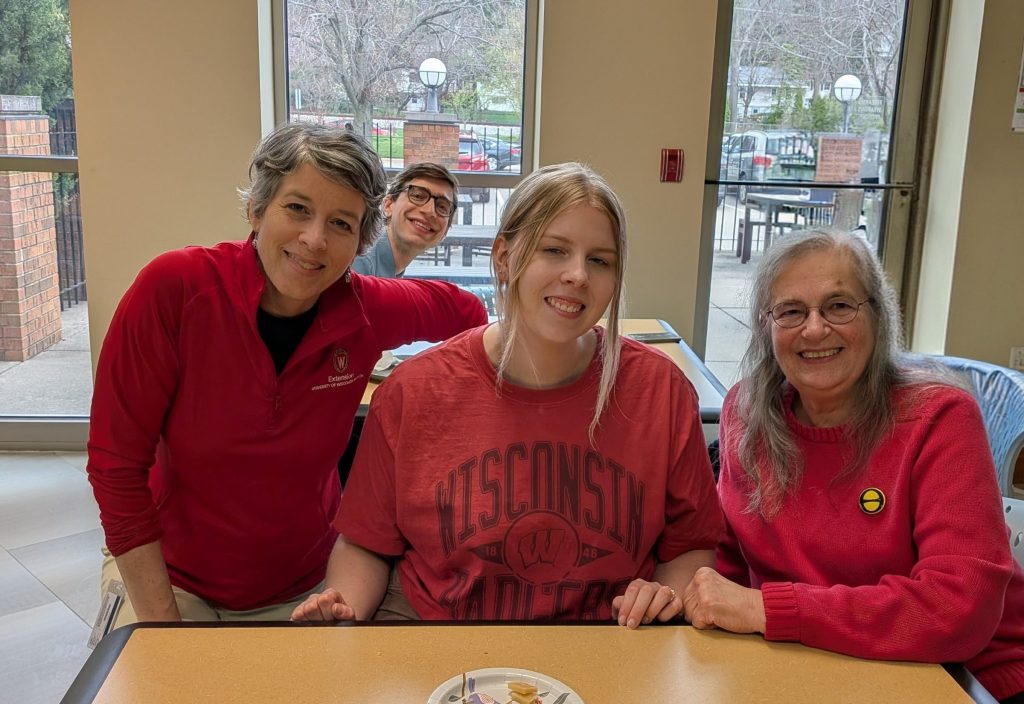
That same continuum is reflected in my own experience. When I transferred to UW–Madison in 2023, I was interested in sustainable agriculture and communication, but unsure how they fit together. Declaring life sciences communication as a major gave me a starting point, but it was my 2024 internship with NRI that brought everything into focus. With mentorship and hands‑on responsibility, I learned how collaborative conservation connects research, communication, and the communities they serve. That experience directly led to my current role in the NRI’s marketing and communications unit.
My story, along with those of Ziah, Cara, Hope, Emily, Mel, David, and Aliana, points to a shared truth. When young people are given real opportunities, they discover who they can become.
This Day of the Badger, your support helps NRI continue creating those opportunities. Whether it’s a high school student testing water quality for the first time, an undergraduate refining research methods with mentors, or a young professional leading their first environmental education program, your generosity helps make these pathways possible.
Together, we are supporting the next generation of Wisconsin’s natural resource leaders.