

For generations, Vermont and New York have dominated the national conversation about maple syrup. But a quiet shift is underway in the Upper Midwest. Wisconsin is rapidly emerging as a maple powerhouse.
In the last decade, Wisconsin has doubled its maple syrup production and now ranks third in the nation, yet millions of tap‑ready sugar maples still stand untouched across the state. “Wisconsin has more untapped maple potential than anywhere else in the country,” says Tony Johnson, UW–Madison Extension Natural Resources Educator. “And while there is a lot of new interest of late, Tribal communities here have been harvesting maple syrup for centuries.”
Maple isn’t just a crop in Wisconsin — it’s a cultural tradition, a commercial opportunity, and an ecological treasure. And UW–Madison Extension is helping make sure more people can be part of it.
To address this burgeoning interest, UW–Madison Extension offers hands-on workshops, Maple Hour webinars, sugarbush forestry trainings, and beginner resources that have reached thousands of Wisconsinites. “People are really eager to learn about sugaring. Our survey data shows that over the last 3 years, over 120 people have started tapping for the first time or expanded their operations with Extension’s help, and dozens of small sellers have grown or launched maple businesses,” notes Johnson.
For private woodland owners, tapping even a handful of trees offers much more than syrup. It’s time spent outdoors with family, the joy of creating something from their own land, and a meaningful way to steward Wisconsin’s forests. Sugaring season also falls during that quiet window between winter and spring — a cherished time when generations have headed into the woods to gather sap and savor the stillness.
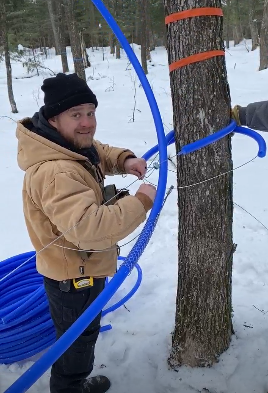
But maple isn’t only a hobby — it’s a promising commercial industry. To help producers scale up, UW–Madison Extension is investing in practical, accessible training infrastructure. At Kemp Natural Resources Station in Woodruff, a newly installed maple tubing system is now being used for hands-on demonstrations. “It will teach small operations how to move beyond simple sap buckets and bags to a modern tubing system,” says Scott Bowe, UW–Madison Extension Wood Products Specialist. “These gravity‑based systems can maximize sap yield with low‑cost materials and the natural slope of the land. We also have a small-scale evaporator we can use in our demonstrations.” This kind of support is helping Wisconsin producers — from backyard sugarmakers to commercial operations — meet growing consumer demand while building a stronger maple economy.
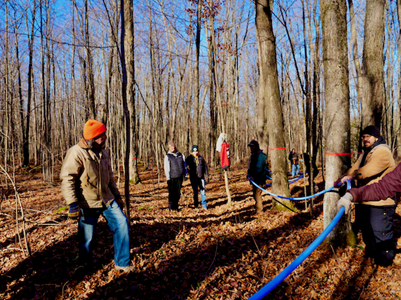
Indigenous communities have stewarded maple forests, harvested sap, and passed down sugaring traditions for countless generations. Today, UW–Madison Extension is working alongside Tribal Nations to support maple production that strengthens food sovereignty and honors cultural practice. Last November, UW–Madison Extension partnered with Bad River Food Sovereignty, the Great Lakes Indian Fish & Wildlife Commission (GLIFWC), the Wisconsin Tribal Conservation Advisory Council (WTCAC), the Great Lakes Intertribal Food Coalition, and the Menominee Department of Agriculture and Food Systems at Bad River for an intertribal maple syrup tubing workshop. Participants practiced layout planning, line tensioning, and drop‑line installation while learning about the cultural significance of sugaring. The hands-on format helped participants build skills they will bring back to their own sugarbushes, supporting local food sovereignty efforts and strengthening community‑led maple production.
According to Hannah Arbuckle, Indigenous Food Sovereignty Outreach Specialist at Extension, this training is one example of how maple sugaring continues to be both a cultural practice and a growing opportunity across Wisconsin. “Last season, we invited Tribal maple sugaring producers to visit Menomoniee’s Tubing Pilot Project and the Forest County Potawatomi Sugarbush. This year, we are hosting a Tribal Maple Storytelling online gathering and partnering with the Red Cliff Mino Bimaadiziiwin Farm to offer a Chainsaw Safety Training, with additional events currently being planned for this year. It has been really exciting to see so much activity and learning happening across so many Tribal communities.”
According to Johnson, one of the things that makes maple sugaring so appealing is that it doesn’t require a commercial setup, and so many different people can participate. “Maple sugaring just requires curiosity, a few trees, and a willingness to try something new. Tapping your own trees might seem intimidating at first, but UW–Extension has plenty of resources to help get you started.” Wisconsin’s maple industry is growing fast but there is room for everyone — hobbyists, commercial producers, and both Tribal and non-Tribal communities — to shape its future.