

Many people associate wildfires with the Western United States, but wildfires are a critical natural resource issue – and land management tool – throughout the United States, including Wisconsin. Many Wisconsinities will remember the summer of 2023 when wildfires destroyed more than 37 million acres of Canadian forests, and Wisconsin recorded some of the worst air quality indices in the nation. But despite the negative consequences of wildfire, fire is an essential land management tool in Wisconsin and throughout the Midwest.
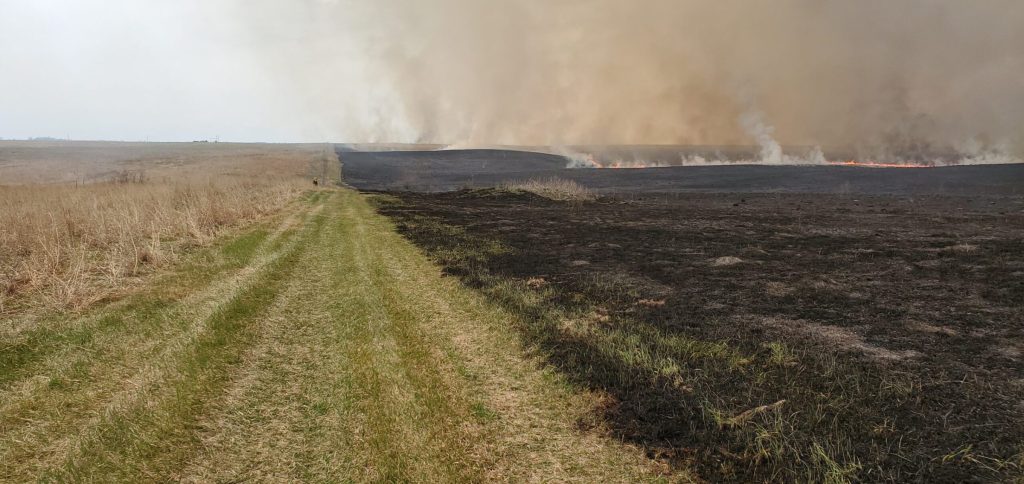
You may have heard the saying “Don’t fight fire with fire” when trying to address conflict without escalation, but when it comes to wildfires, fighting fire with fire is precisely what needs to be done. Controlled burns or prescribed fire play a crucial role in preventing catastrophic wildfires by removing flammable materials such as dead leaves, tree limbs, invasive plants, and other debris. Unlike the fires that caused the smoke-filled skies of 2023, prescribed fires are carefully planned and executed. They replicate the smaller, natural fires that historically maintained balance in prairie ecosystems. The benefits are huge: invasive plants are reduced, nutrients are recycled, and native species are given space to thrive without the risk of destruction. Despite its poor perception, fire is a valuable tool for maintaining a healthy environment.
Helping natural resource outreach professionals access credible fire science to engage communities and improve public understanding of fire’s benefits is part of the mission of the Tallgrass Prairie and Oak Savanna Fire Science Consortium (TPOS). Housed at the University of Wisconsin in collaboration with the Nelson Institute and the Extension Natural Resources Institute, and funded by the Joint Fire Science Program, TPOS is one of 15 regional exchanges that make up the Fire Science Exchange Network. These exchanges give wildland fire information to federal, state, local, and Tribal entities and provide a key opportunity for fire managers, practitioners, and scientists to work together to address regional fire management needs like wildfire prevention.
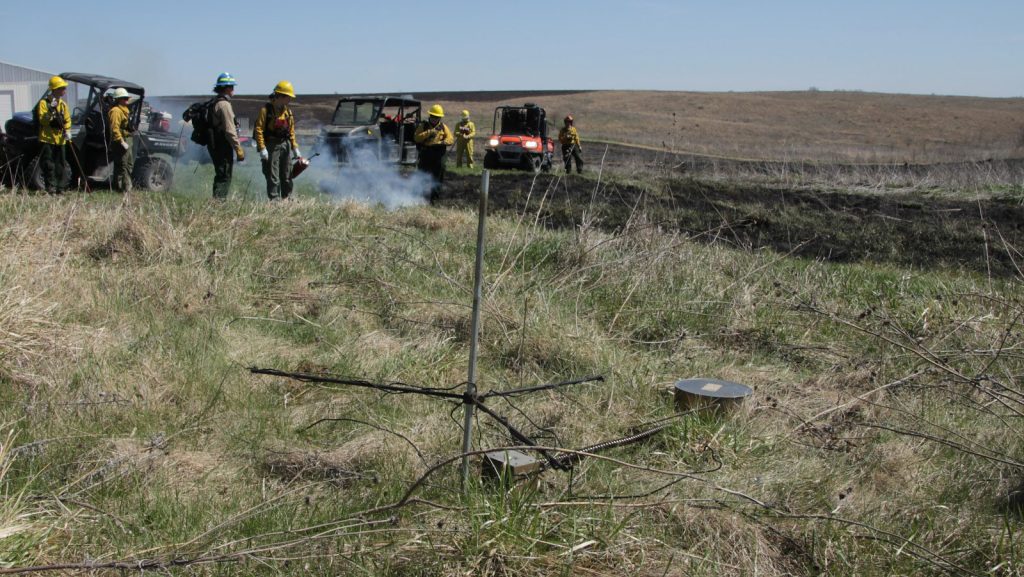
TPOS also works to make fire science accessible, fostering peer-to-peer learning and creating opportunities for researchers and managers to connect around shared challenges. Together they host online and in-person learning events, a growing library of scientific publications, and training opportunities for both professionals and students.
The consortium also partners in the Fueling Collaboration webinar series, now in its sixth season. On November 20, Paul Charland, Coordinator of TPOS, moderated “Flashy Fuels and Resilient Lands – Fueling Distinct Prescriptions for Eastern Grasslands.” This event, like others in the series, brought together diverse voices to address the distinct fire science needs of prairie ecosystems. Unlike forests, prairies lack an overarching management system to guide research and fire programs. That absence makes it harder for managers to access and share information. TPOS helps fill that gap, ensuring that awareness, understanding, and application of fire science are shared across the region.
Charland, who recently retired from the U.S. Fish and Wildlife Service, notes that his career has been shaped by the realization that fire and habitat resilience go hand in hand.
“When people think about fire, they often picture smoke and damage — the kind of scenes we all lived through during the Canadian wildfires,” Charland explains. “But in prairies and savannas, fire is what keeps the system alive. Without it, these landscapes collapse under invasive species and fuel buildup.”
Charland’s perspective highlights the consortium’s mission to accelerate the awareness, understanding, application, and review of wildland fire science across the region. By providing opportunities for peer-to-peer learning, connecting researchers and land managers, and making fire science research tailored to the needs of natural resource professionals, land managers, and researchers, the consortium helps communities understand how fire can be used as a tool.