

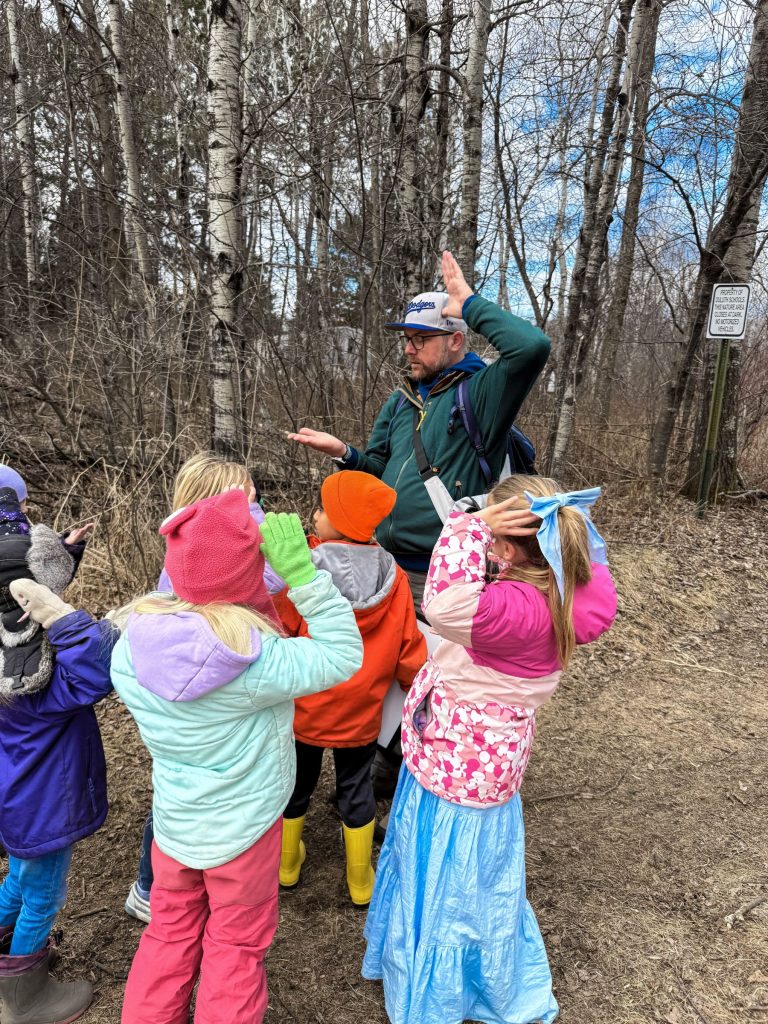
Outdoor learning isn’t a luxury; it’s one of the most effective tools we have for helping kids thrive. Class time outdoors elevates academic performance, improves physical and mental health, boosts social skills, reduces stress and ADHD symptoms, and can even delay or prevent myopia (near-sightedness). It deepens students’ sense of place and civic environmental responsibility, and it even strengthens family and community connections.
Yet despite these benefits, many kids spend less than 10 minutes a day playing outdoors. Across the state, teachers see this gap firsthand. Educators point to a lack of consistent, structured outdoor STEM curricula and limited program availability, despite the state’s rich natural resources. UW–Madison Extension’s Natural Resources Institute is working to change that by offering both in‑person experiences and a growing library of place‑based resources that help educators bring environmental science outdoors, no matter where their classrooms are.
Extension is home to Upham Woods Outdoor Learning Center — a residential, year-round, outdoor learning center offering environmental education and outdoor recreation programs. Through day trips, overnight visits, and camps, Upham Woods’s programs ignite curiosity, cultivate leadership, and create a lasting impact on the natural world. Upham Woods staff also bring interactive environmental educational programming to local schools, community centers, and anywhere youth meet.
Extension also partners with UW–Green Bay to host the Lower Fox River Watershed Monitoring Program — a 20+-year effort where Northeast Wisconsin high school and middle school classrooms adopt a local stream for seasonal monitoring of water quality parameters. Students contribute to a long-term data set assessing the health of streams in the Green Bay watershed. The program also facilitates the Wild Rice in the Classroom project, which gives students experience restoring wild rice in the bay of Green Bay. Over winter, students and teachers grow rice from seed in their classroom before transplanting the plugs into wetland sites across lower Green Bay. During classroom and field experiences, students learn about the importance of Manoomin to Indigenous communities across the Great Lakes, highlighting both the cultural and ecological significance of wild rice restoration.
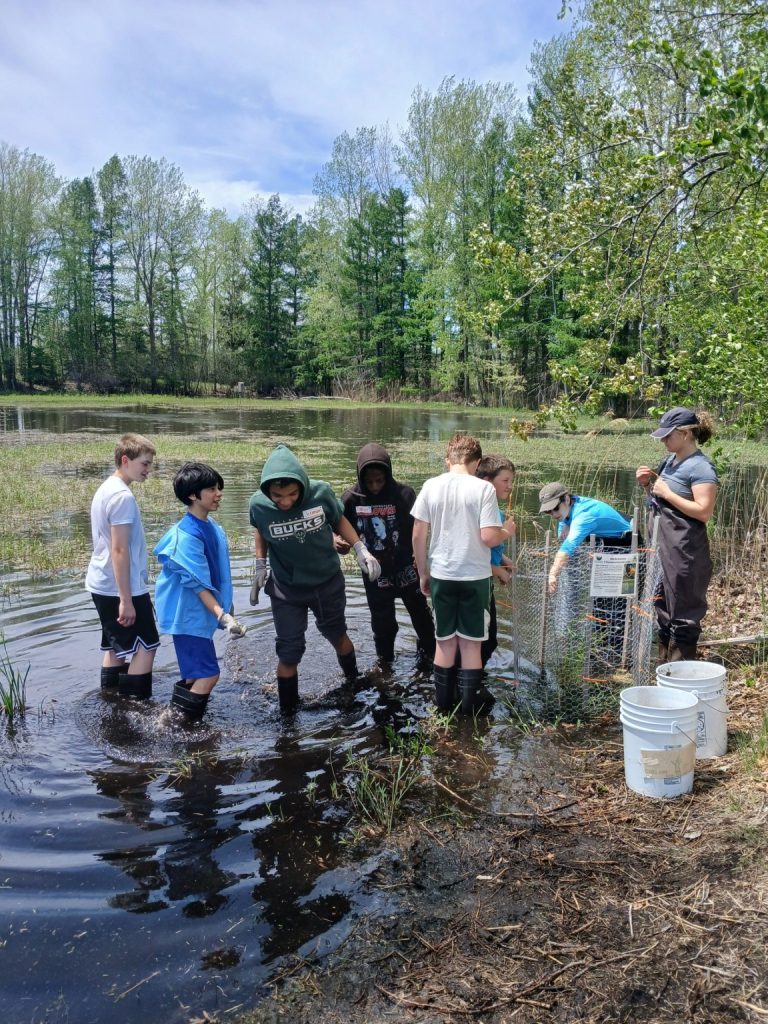
Not every educator can bring their students to these sites. That’s why we provide ready-to-use activities that are designed for teachers to use on their school grounds or in their community.
TheWater Action Volunteers (WAV) program is a statewide partnership between Extension and the Wisconsin Department of Natural Resources, empowering volunteers to collect high‑quality stream data to support decision-making on resource management issues. WAV’s classroom resources help educators introduce water quality science to middle and high school students through hands-on exploration. Teachers can access tools such as biotic index posters, aquatic macroinvertebrate identification keys, monitoring method fact sheets, and a WAV monitoring kit purchasing guide to assemble materials. There is also the Exploring Streams Monitoring Curriculum Guide, which includes an activity guide and protocol for hands-on exploration on a field trip to a local stream or waterway. These materials allow students to dive into monitoring Wisconsin’s stream health, identify aquatic life, and understand how healthy waterways support healthy ecosystems and outdoor recreation.
To help students learn about weather, climate, and habitats, the Microclimates of Wisconsin curriculum, created by Upham Woods staff and available for check out by the Wisconsin Center for Environmental Education, offers a ready‑to‑use classroom toolkit for grades 4–12. With Kestrel weather meters, IR thermometers, thermal cameras, densiometers, and field guides, students compare habitats, record microclimate data, search for animal signs, and predict how environmental changes influence where plants and animals live. This project is supported by a Rural Partnerships Institute grant and was developed in conjunction with the UW–Madison Department of Planning and Landscape Architecture and the Center for Climatic Research.
Extension staff at Upham Woods Outdoor Learning Center have also created free lesson plans enabling students to visit a local river, collect a water sample, and then use laboratory equipment to extract environmental DNA to test for the presence of different invasive species. The curriculum enables youth to serve as “river detectives” by analyzing eDNA to uncover what species may be present in their local water body.
For educators along Wisconsin’s Lake Superior shoreline, the Rivers2Lake Education Program, led by the Lake Superior National Estuarine Research Reserve, provides yearlong support, including co‑teaching, workshops, and professional development for teachers looking to integrate more Great Lakes–focused content and outdoor learning into their classrooms. Rivers2Lake also has a comprehensive catalog of curricula for all ages across multiple subject areas, including STEM, that educators can explore — many of which include outdoor learning components.
Together, these programs, curricula, and hands‑on tools share a common purpose: helping Wisconsin educators bring environmental science to life in the outdoors. When teachers have the support they need, students spend more time outside, develop a deeper understanding of the natural world around them, and build the foundation for lifelong environmental stewardship.
The eDNA project was funded by the University of Wisconsin Sea Grant Institute, with support from the National Sea Grant College Program, the National Oceanic and Atmospheric Administration, U.S. Department of Commerce, and the State of Wisconsin. Federal grant number NA24OARX417C0029-T1-01, project number E/ELWD-28. Support for this research was also provided by the University of Wisconsin–Madison Division of Extension with funding from the Innovation Grant Program.