

Are your farmers experiencing field day fatigue? Do declining attendance numbers leave your conservation group feeling discouraged?
According to Whitney Prestby, Demonstration Farms Outreach Team Lead at UW–Madison Extension, it may be time to recognize the value of the small field day. Large events often shine in end-of-year reports, but if attendance has declined or practice adoption has plateaued with your producer-led group, it may be a sign that farmers in your area are ready for a different kind of learning experience.
Large field day events serve an important role, especially at the onset of a new conservation group. There’s energy in gathering a crowd and that enthusiasm can be contagious. Seeing neighbors and peers engage with conservation practices — like cover crops or reduced tillage — helps normalize these practices and begins to break down the stigma that only certain farms can make conservation work on their operation. This is an important early step for any group trying to build momentum and increase adoption of conservation practices. But farmers’ needs evolve.
Adopting conservation practices like cover crops and minimal tillage require large-scale management changes. As farmers move from awareness to implementation, they need the opportunity to ask detailed questions, troubleshoot challenges, and learn from peers they know and trust. With the help of UW-Madison Extension, the NRCS Wisconsin Demonstration Farms Network, has been rethinking the traditional field day to better align with these needs.
There are six Great Lakes Restoration Initiative (GLRI) funded Demonstration Farm Networks in northeastern Wisconsin — and each are comprised of farms leading the way in showcasing conservation practices to reduce phosphorus and sediment from entering our watersheds. UW-Madison Extension provides outreach and education to support the Networks and recently the team has put more of an emphasis on small, peer-to-peer learning opportunities.
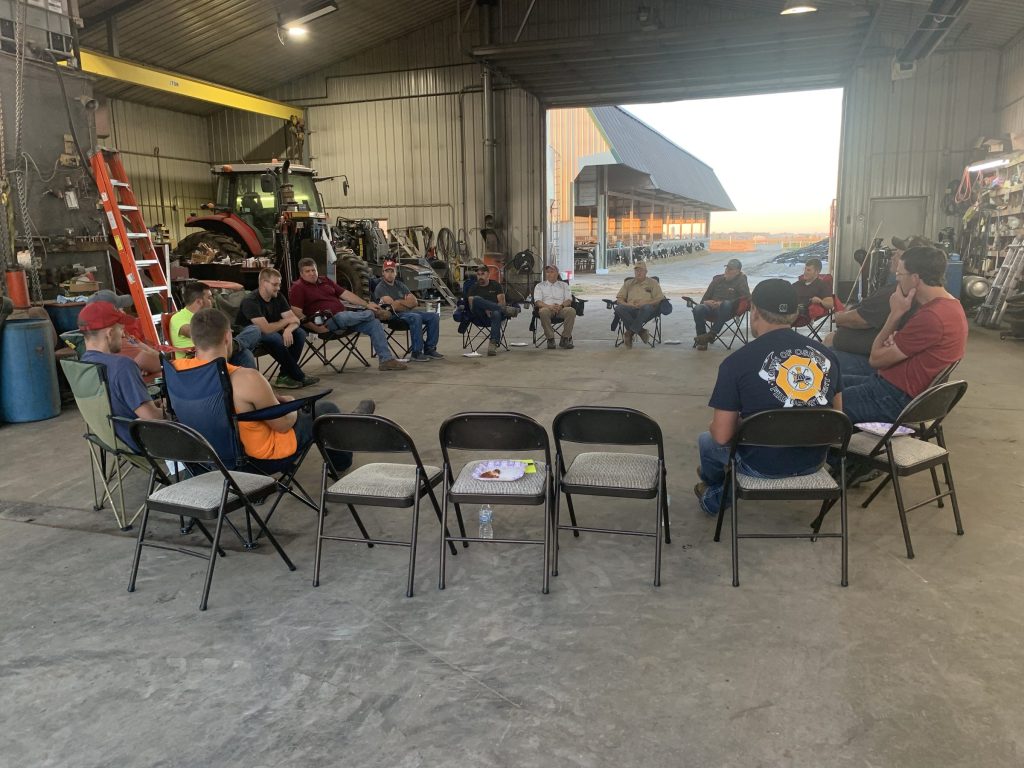
One example is the Fox Demo Farms’ Demo Farms at Dusk series, modeled after the Door-Kewaunee Demo Farms and Peninsula Pride Farms’ Conservation Conversations. The model is simple: set a consistent time (e.g., second Tuesday of every month), identify a timely topic, select a host farm, and in addition to using typical communication channels, encourage the host farm to invite their neighbors.
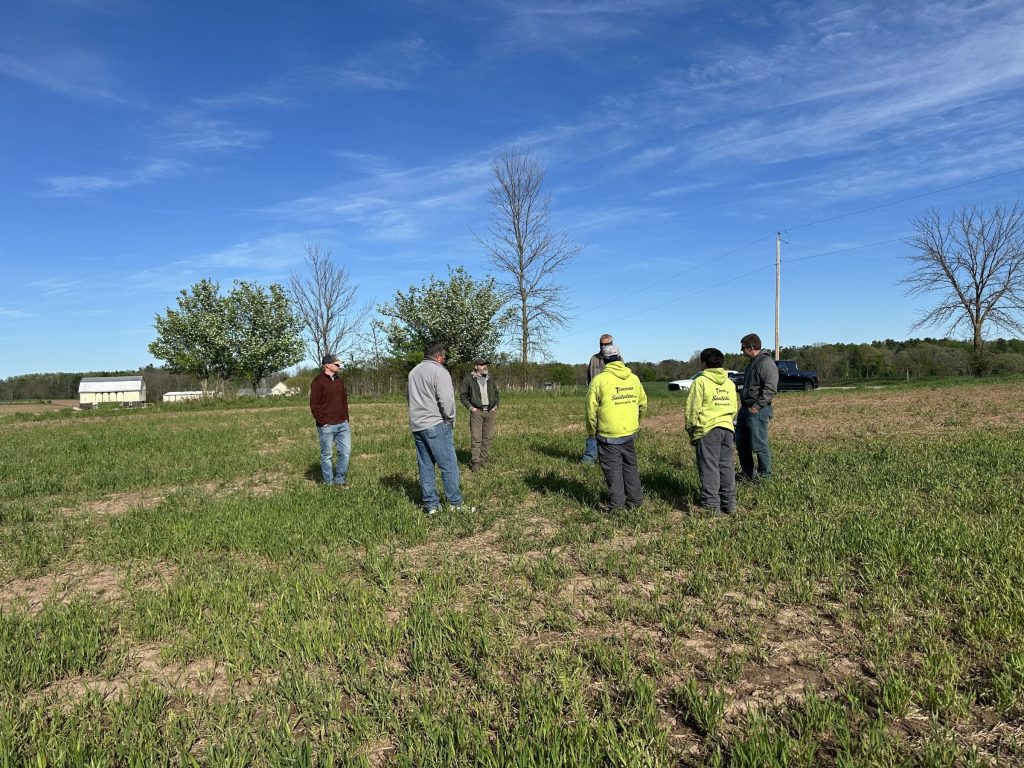
Attendance averages around 10 people, including a facilitator and at least two agronomists. While the small number of farmers isn’t flashy on paper, the in-depth conversations and the connections made are worth their weight in gold.
“The questions we get at these events are more candid and the connections these farmers walk away with are stronger,” notes Prestby, who is helping lead the effort for the Lower Fox Demo Farm Network.
Prestby has been working with the Demo Farm Networks for close to 10 years, providing social science backed outreach, education, and communication support to ensure the networks are successful and farmers are supported. After all these years, she notes, “Successful outreach depends on relationships and tailored support. Farms need the opportunity to dig deeper into the practices, ask questions in a comfortable setting, and get direct feedback from experienced farmers and agronomists.”
This is reinforced when Prestby is out talking to farmers. In 2022, a Fox Demo Farm participant noted, “In large meetings, nobody absorbs anything, but when you get people talking one-on-one, that drives the message across easier.” Large field days can still serve an important purpose, but these findings underscore an important takeaway — just like farming, there’s not a “one-size-fits-all” approach to outreach. A mix of approaches is essential.
By combining the reach of large events with the depth of small-group learning, Extension is helping farmers move along the adoption pathway—from initial interest to confident implementation. Supporting the NRCS Demonstration Farm Network through targeted education and outreach ensures that farmers have access to the right information, in the right setting, at the right time.