

The Conservation Professional Training Program (CPTP), a program of UW–Madison Extension, has been honored with the 2026 North Central Region Team Excellence in Extension Award by the Association of Public and Land–grant Universities. The award recognizes outstanding achievement in Extension research, technical assistance, and outreach education, and shines a light on the program’s long track record of supporting the people and agencies who care for our land and water, ensuring they have the tools and training they need to do their best work.
CPTP got its start back in 2003, when it was clear that new staff at the Natural Resources Conservation Service (NRCS) and local conservation districts needed better, more consistent training. Many experienced staff were within a few years of retirement, and there was not enough support for newer staff just starting out. Extension stepped in and brought together partners from across several states to build a training program for new and existing staff.
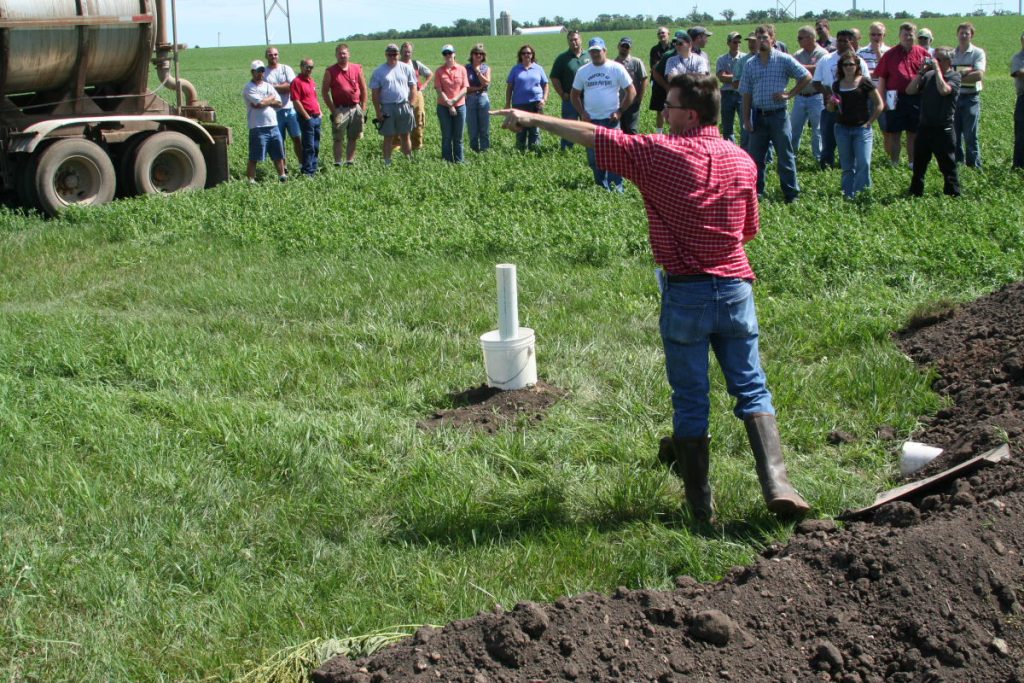
“So many people working in conservation are coming from a variety of different backgrounds,” notes Kevin Erb, the Conservation Professional Training Program program manager. “I have been with Extension for over 34 years, educating people on water quality and nutrient management. That just isn’t the case anymore for most people. People change jobs frequently and may come to work for NRCS or other conservation agencies with a background in water resource management or agronomy, and have little knowledge of soil science or agricultural engineering, making on-the-job training essential.”
In the last few years, CPTP has fine-tuned how it develops courses, making sure each one is practical, accessible, and meets the needs of conservation professionals. The team has put together 24 online courses, which have been taken thousands of times, adding up to over 100,000 hours of learning.
One recent big project was redesigning a multi-day field course for agency staff, Technical Service Providers, and partner organizations into a mix of online and in-person learning, making it easier for people to complete with less time out of the office. NRCS data shows that almost 100 percent of the 2,018 Certified Level 1 and Level 2 Conservation Planners (agency and partners) have completed multiple courses developed by CPTP. These courses expanded access to required training while reducing travel costs and time away from the office. This new approach has also resulted in significant time and travel cost savings for the agency. For example, one of the courses developed by the CPTP team reduced a 4-day in-person training to a 2-day in-person training with a 3-hour online component. This redesign potentially reduced out-of-office days for each of the 7,089 unique individuals who completed the AgLearn training. This saved up to 92,157 staff hours (44.3 FTE), while eliminating up to 14,178 days of travel and per diem costs for NRCS and partners.
The CPTP team includes a mix of accessibility experts, instructional designers, evaluation specialists, editors, and graphic designers. Together, the team brings diverse expertise to transform complex topics such as conservation planning, water quality, rangeland health, and wetland conservation into accessible learning solutions. The team works collaboratively with subject matter experts to facilitate content discussions, design and develop the training, manage the review process, and oversee the training launch. They also ensure that training content meets federal accessibility standards and develop needs assessment instruments to evaluate learning and course success.
CPTP is making sure conservation work is welcoming and useful for everyone. Their Communication Skills course helps staff connect with all kinds of landowners, including folks who haven’t always been at the table. And with a new course launched in 2025, they’re expanding service to new audiences, including small-scale operations and urban farmers. With strong partnerships and steady support, CPTP shows how working as a cross-disciplinary team can bring people together and make a real difference for conservation across the country.