

These days, much of life seems to have shifted indoors. As Americans spend nearly 90 percent of their time indoors, the Wisconsin Master Naturalist program is creating a counter‑current: structured, meaningful opportunities for adults to reconnect with nature—and experience measurable benefits to their well‑being. Each year, Master Naturalists spend 40 hours learning outdoors, and the impact is striking: in 2025 alone, 85 percent reported improved mental and physical well‑being as a result of the training.
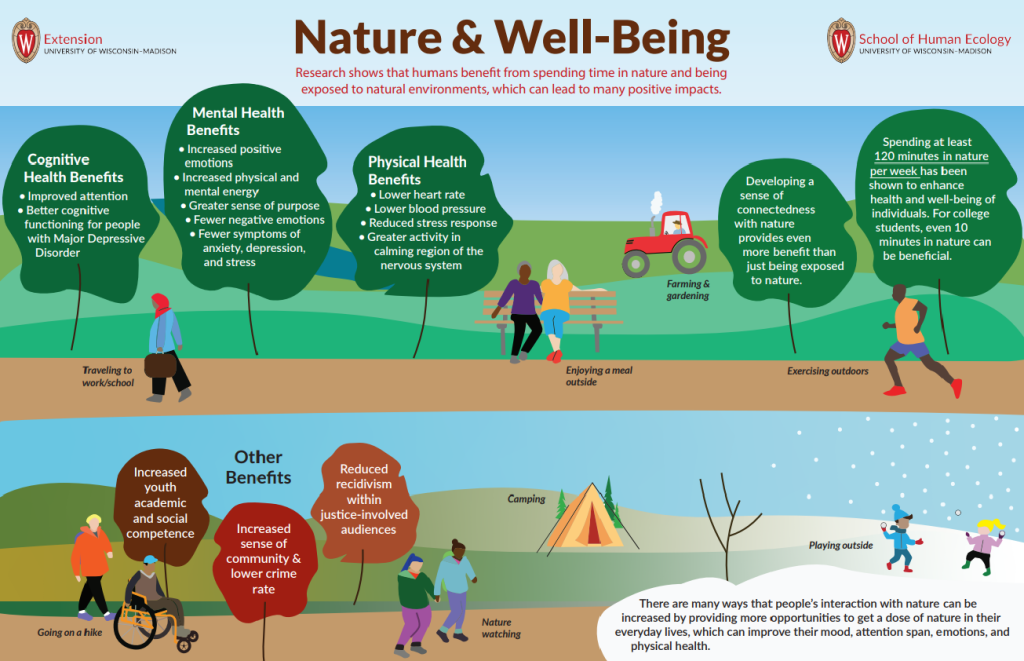
A newly updated Nature & Well‑Being graphic from UW–Madison Extension highlights the research that confirms this finding: time in nature, and especially a sense of connection with the natural world, supports mental, physical, and cognitive health.
Larissa Duncan, Elizabeth C. Davies Chair in Child and Family Well-Being at UW–Madison and an Extension specialist, studies how environments shape well‑being. Duncan explains how, “It’s not just time outdoors that matters; it’s the sense of connection people feel with nature. Even brief moments outside can support well‑being, but connection amplifies those benefits.”
The updated graphic was co-created by a team of UW–Madison graduate students and Extension faculty and staff, and it summarizes findings showing that time in natural settings can lower stress responses, improve attention, increase positive emotions, and support physical health. Even 10 minutes sitting or walking in nature can make a measurable difference, especially for students under high academic pressure.
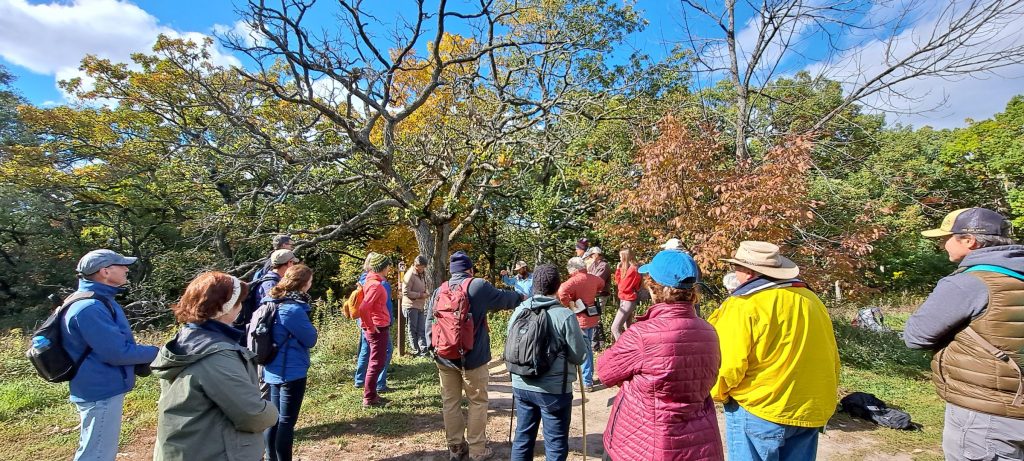
While Duncan brings the research perspective, Becky Sapper sees the impact firsthand. Each year, Wisconsin Master Naturalists spend 40 hours learning outdoors through hands‑on, place‑based training.
In 2025, 85 percent of those participants reported a positive change in their physical and mental well‑being during the training. Participants describe the experience in their own words:
- “A hike in the woods serves as my mental and physical reset.”
- “Being outdoors has been a lifesaver for my mental, physical, and spiritual health.”
- “Outdoor activities help me feel connected to myself and the world around me.”
- “It boosts my energy, clears my mind, and keeps me feeling refreshed.”
Sapper says these themes appear year after year. “People consistently tell us that being outdoors during the Master Naturalist training improves their well‑being — mentally, physically, socially. Many join during times of transition, and they find the experience grounding, with an unexpected sense of community.”
The updated Nature & Well-Being graphic is now available in Hmong and Spanish to support broader access. Duncan notes that, “There are real disparities in access to nature. Offering the graphic in multiple languages helps make this information more inclusive and more useful to the communities we serve.” This is an important step toward addressing disparities in who has access to nature and nature‑based programming.
Both Duncan and Sapper hope the updated graphic helps more educators integrate nature into their programming and better evaluate its benefits.
“My hope is that educators across Extension feel equipped to include nature and nature connection in their work, and that those already working outdoors have tools to measure the benefits for participants,” notes Duncan.
As Wisconsin continues to navigate a post-pandemic landscape, the evidence is undeniable: even brief, intentional moments outside can be transformative. Extension initiatives like the Master Naturalist program do more than just facilitate outdoor access; they cultivate a powerful reciprocity. While originally designed to mobilize volunteer service on behalf of the environment, these programs are revealing a vital truth: As we work in the natural world, nature in turn is positively impacting the health and well-being of volunteers and the communities they inspire.